Delirium Superimposed on Dementia
A Difficult Episode: When Grandma Gets Upset
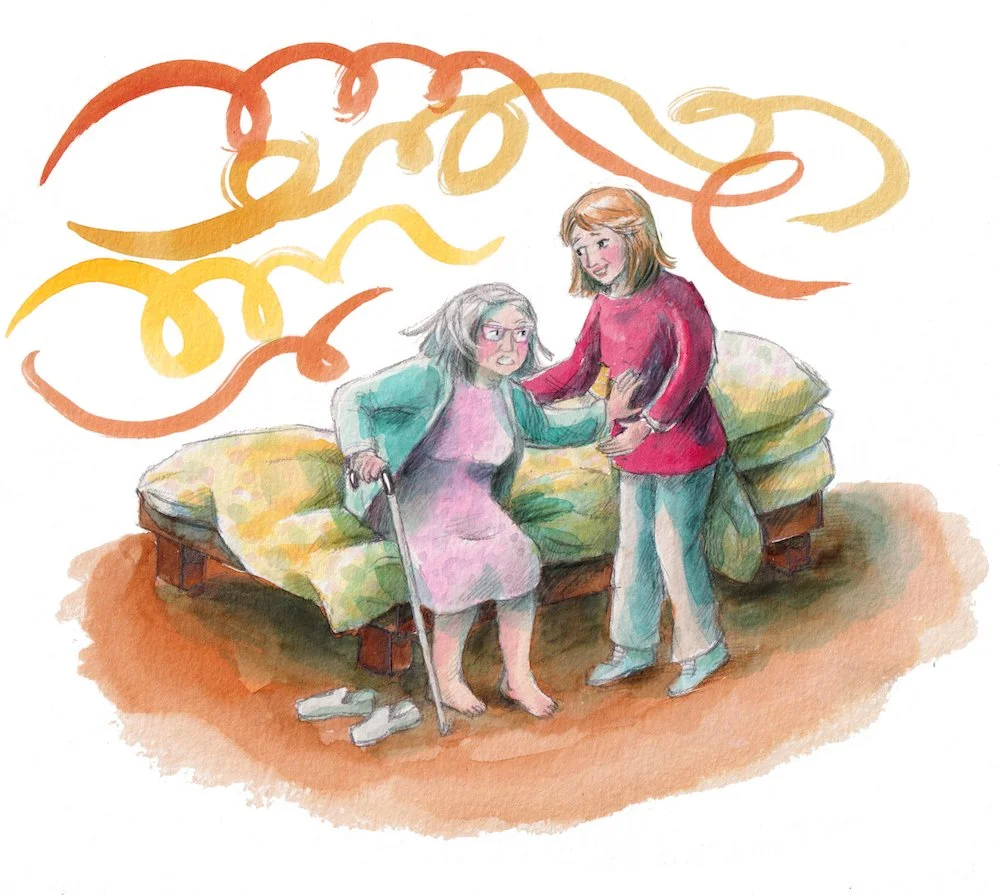
One of the most difficult segments of the book to write was the episode when Grandma becomes upset and angry with her daughter, the caregiver in the home. While I did not want to convey to children that every person with dementia displays this kind of behavior, sometimes they do - and I wanted the story to be realistic without being frightening.
I focused on several key points that I felt were important for children to understand:
How the caregiver responds matters most. The caregiver in the story remains calm and reassuring, using gentle redirection to help manage her mother’s behavior.
It’s okay to feel a range of emotions. When a loved one acts differently, children may feel confused, sad, or even scared. It’s important for them to know those feelings are normal - and that they can talk about them with a family member.
It’s not anyone’s fault. Dementia damages the brain, making it difficult for the person to process what’s happening. Their reactions may seem unpredictable, but they stem from changes in the brain - not from anger or intent.
Certain types of dementia, such as Lewy body or frontotemporal dementia, are more often associated with behavioral changes. These behaviors can come and go and vary over time. Sometimes there are ways to reduce their intensity, but every person’s experience with dementia is unique, and strategies or treatments may differ.
There’s another possible reason for sudden changes in behavior in someone with dementia, especially when the change occurs within hours, days, or weeks. This condition is known as “delirium superimposed on dementia,” and it’s exactly what happened with my mother.
When My Mother Came to Live With Us
When I brought my mother home from assisted living during the COVID-19 pandemic, She was fragile, disoriented, and more confused than I had ever seen her. She had endured five weeks of isolation. While the facility did its best to keep residents connected, they were confined to their rooms with little interaction or stimulation. She appeared disheveled, her hygiene was poor, she had lost weight, and she was newly incontinent. She could no longer swallow her pills whole, so I crushed them and hid them in applesauce.
The first few nights in our home were difficult. She didn’t recognize my husband, repeatedly asking, “Who is that strange man in the house?” This was something completely out of character for her.
One evening, as I helped her get ready for bed, she suddenly became angry, shouting and pushing me away. I stayed calm, reassured her that she was safe, and tried to gently redirect her.
Because of my nursing background, I knew there was something more going on than just behavior changes related to dementia. Sometimes families assume that a change in behavior is simply a part of dementia’s progression, but there is something known as Delirium superimposed on dementia, which is related to a cause other than dementia and can easily be overlooked.
We had her medically screened for possible triggers, and thankfully all tests came back negative. I believe her delirium developed as a result of prolonged isolation — a less common but still credible cause.
I share this story because it’s important for family caregivers to understand what delirium is and how to recognize it.
What Is Delirium?
Delirium is a syndrome characterized by a sudden change in thinking, memory, awareness, or behavior - usually caused by an underlying medical issue. It can develop over hours or days and, unlike dementia, it comes on quickly and can often be reversed if the cause is identified and treated.
Recognizing delirium in someone with dementia can be challenging because the symptoms may look like a worsening of their usual confusion or forgetfulness. The key difference is timing: if the change happens suddenly, it’s not normal dementia progression.
Signs to Watch For
Caregivers should look for sudden changes such as:
Increased confusion or agitation
Withdrawal or unresponsiveness
New onset of Hallucinations or paranoia
Trouble focusing or being attentive
Changes in sleep-wake patterns
Types of Delirium
Hyperactive: Restless, agitated, or aggressive behavior
Hypoactive: Drowsy, sluggish, or unusually quiet
Mixed: A combination that fluctuates between both
If you notice a sudden change like this in your loved one, contact their healthcare provider immediately. Medical evaluation is essential to determine if delirium is present and to identify and treat the underlying cause.
Recovery and Prevention
Over the following months, my mother gradually improved and eventually returned to her previous level of functioning. Recovery was slow and required patience, structure, and consistent care - but it was possible.
Simple yet powerful measures supported her recovery:
Staying physically and mentally active
Getting adequate rest and quality sleep
Eating nutritious foods and staying hydrated
Engaging in familiar, meaningful activities
Feeling included in daily life and social connection
Wearing her hearing aids and glasses regularly
These steps not only helped her heal but also nurtured her emotional well-being. They are essential for all older adults living with dementia, especially after illness, stress, or isolation.
Helping Children Cope
You may notice that the story in my book doesn’t go into the details of why Grandma’s behavior changes. That choice was intentional.
The story is told from the child’s point of view - indirectly, through the family pet. In times of uncertainty, what matters most to children is not why something is happening, but whether they feel safe and loved.
Behavioral changes in a loved one with dementia can be confusing or frightening for children. It’s not their responsibility to understand the reason or carry that emotional weight of the situation.
If you are an adult caring for someone with dementia while supporting a child, remember: answering questions simply and honestly - without overwhelming detail - goes a long way. What truly matters is being present, reassuring, and loving.
Resources for Caregivers
If you’d like to learn more about delirium, I encourage you to explore the excellent resources offered by the American Delirium Society:
Closing Thought
Whether you’re a caregiver, a child, or a loved one walking beside someone with dementia, remember: compassion and patience are powerful medicines. Healing often begins not with answers, but with presence - and love.